For families, children, and clinicians Warm guidance · rigorous evidence · connected care

Built for the people who explain, reassure, measure, and keep a weekly rhythm going

A warmer, more imaginative place to explore weekly growth care.

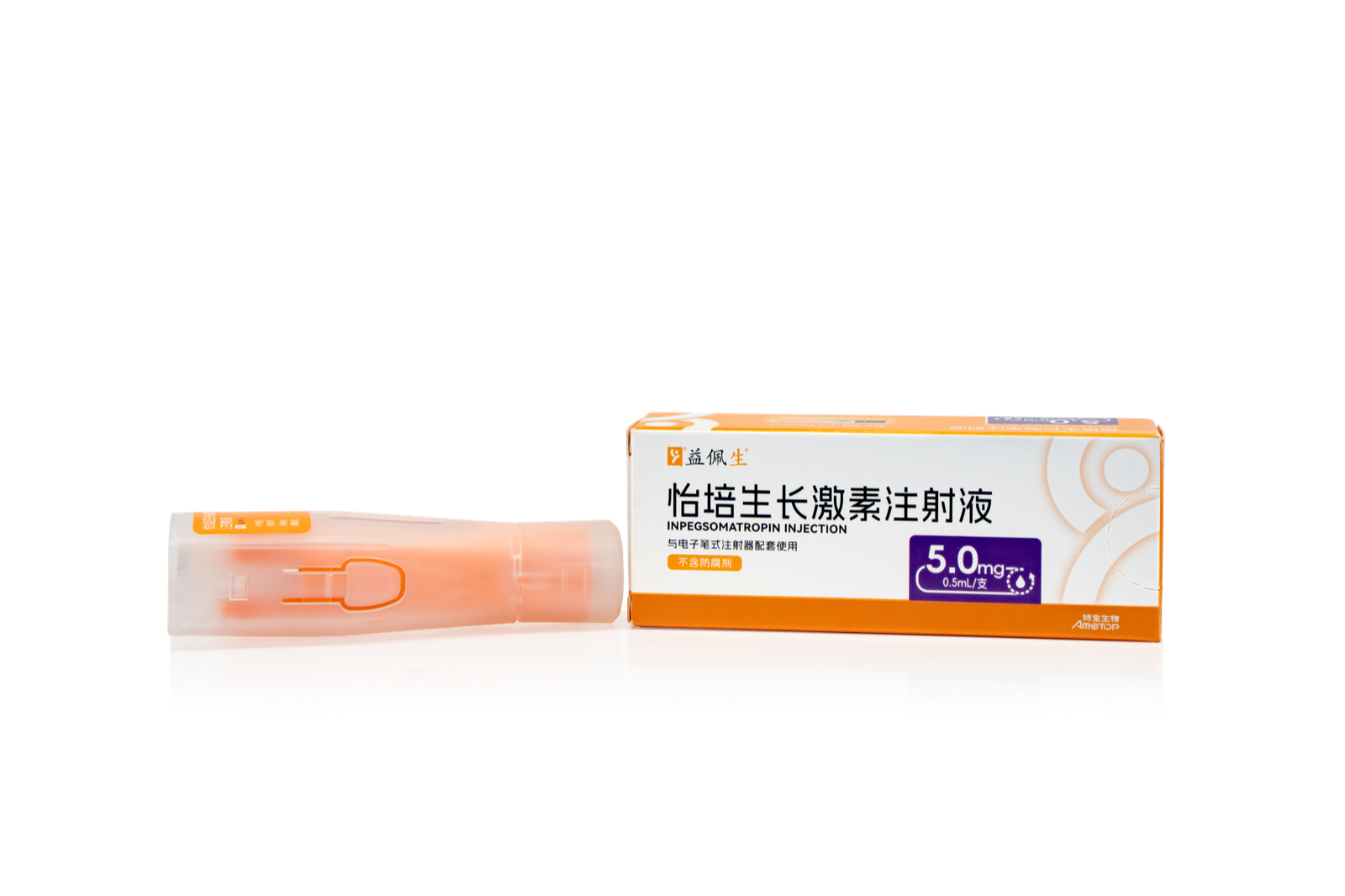
Pegpesen® is the trade name for inpegsomatropin, a once-weekly PEGylated recombinant human growth hormone developed by Xiamen Amoytop Biotech for pediatric growth hormone deficiency (GHD) where authorized. This refreshed homepage is designed to feel kinder for families and more useful for professionals at the same time: story-led browsing for children and caregivers, source-linked evidence for clinicians, and one continuous scroll that turns product facts into a guided journey.

  • Warm visuals that children can browse with a parent
  • Plain-language structure for practical family questions
  • Direct links back to product documents and journal sources
Authorized local pediatric age: 3+ years Recommended start: 0.14 mg/kg once weekly Missed-dose window: within 3 days
Child smiling in soft natural light, illustrative only

Photo: Robert Collins / Unsplash

3+ yr
Authorized pediatric age in current local label
0.14
mg/kg once weekly, recommended starting regimen
9.910
cm/year Phase III annualized GV at Week 52
~8 wk
IGF-1 steady state at the characterized weekly dose
0.0%
Newly positive ADA rate in local Phase III label summary

Start with the doorway that feels most natural

Families do not arrive with the same first question. Some want calm, practical steps. Some want a brighter page a child can look at together with a parent. Some want the papers first. This opening map gives each reader a welcoming entry without fragmenting the evidence base.

Parent and child reading together at a table
Parent path

Begin with the weekly routine before the hardest terminology.

Parents and caregivers often need the everyday structure first: how a weekly rhythm is set up, what to do if a dose is missed, where injections can go, and when growth response is reviewed.

  • Same-day weekly anchor for easier family planning
  • Catch-up rule kept simple: use within 3 days or skip
  • Regular review every 3 to 6 months links routine to growth
Open the family routine
Children reading books together on the floor
Child-friendly scroll

Let the page feel bright, soft, and safe enough to explore together.

Children usually respond to warmth before terminology. Rounded shapes, story-led images, and shorter visual chapters help the site feel less like a wall of medicine and more like a guided learning space.

  • Picture-rich chapters that break up dense information
  • Clear visual pacing for scrolling with a grown-up
  • Supportive language that stays calm instead of cold
See the visual stories
Books and reading materials arranged in a warm still life
Evidence path

Keep every friendly moment connected to real sources.

For clinicians and evidence-minded parents, the same scroll connects back to peer-reviewed Phase II and III studies, optimization modeling, local product documents, and the trial registration frame.

  • Phase II, Phase III, and modeling read as one corridor
  • PubMed, DOI, and registry links stay visible throughout
  • Local label and device IFU remain the operational source base
Go to the publication shelf
Every path still leads to the same source base.
Local label TopPen I IFU PubMed / DOI ClinicalTrials.gov

Why weekly care feels different in a real family week

Pediatric GHD therapy is not only a pharmacology story. It is also a family-rhythm story: school mornings, caregiver handoffs, travel, reminders, missed doses, and the emotional tone of a long treatment journey. That is why this homepage combines product-specific facts with broader field evidence on treatment burden, adherence, and long-acting GH decision-making.

Field context

Daily therapy can be effective and still feel heavy over time.

In a French multicenter real-world study of children receiving daily GH, overall adherence remained high, yet treatment still interfered with daily life and coping domains enough to be measurable. The practical burden of repeated injections is one reason long-acting GH has become an active area of pediatric endocrine discussion.

Consensus signal

Long-acting GH is intended to reduce injection frequency and burden.

A 2025 international consensus statement on long-acting GH in pediatric GHD notes that reduced injection frequency may lessen treatment burden and could support adherence and outcomes, while also stressing that long-term real-world data are still limited.

PubMed consensus statement
Persistence signal

Scheduling and follow-up are part of therapy design, not a side note.

UK real-world data on daily somatropin show persistence gaps in pediatric GHD, reinforcing why missed-dose rules, easy tracking, and practical family support tools should be treated as part of treatment quality.

PubMed persistence study
Local source base

Homepage facts are anchored to current local documents and journal papers.

Product, dosing, safety, and pharmacology content on this site track local prescribing information approved on May 27, 2025 and revised on June 5, 2025. Injector workflow reflects the TopPen I IFU dated September 28, 2025.

One program, viewed through multiple evidence layers

The Pegpesen evidence story is strongest when read as a corridor rather than a single headline: early PK/PD dose-ranging, confirmatory annualized growth outcomes, then theoretical modeling on how weekly dosing might be optimized over time.

2022 Front Endocrinol · Phase II

PK/PD dose-ranging and 12-week growth signal

The randomized Phase II program enrolled 43 children across 12 centers in China. Once-weekly 0.12 and 0.14 mg/kg arms delivered the closest short-term annualized height velocity increments to daily rhGH, while characterizing IGF-1 response and exposure over the first 12 weeks.

  • 1:1:1:1 allocation
  • 12 wk treatment
  • Primary endpoint: IGF-1 AUC response
2024 online / 2025 print JCEM · Phase III

Confirmatory 52-week efficacy against active control

The domestic Phase III study randomized 391 treatment-naive pediatric participants with GHD in a 2:1 ratio to weekly Pegpesen or daily Norditropin. At Week 52, annualized growth velocity was 9.910 versus 10.037 cm/year, meeting the prespecified non-inferiority margin.

  • 261 weekly Pegpesen participants
  • 130 daily comparator participants
  • Ht SDS change: comparable between arms
2025 online / 2026 print J Endocrinol Invest · Modeling

Theoretical dose optimization for longer horizons

The population PK/PD paper used Phase 1 to 3 data to simulate quarterly dose up-titration and weight-banded regimens. Faster escalation improved modeled year-1 GV, but by month 24 all titration arms converged at similar mean GV, supporting the idea of saturation rather than endless linear gain.

  • 292 subjects in Phase II/III dataset
  • 2,655 PK observations
  • Weight-band window: about plus/minus 1.78 kg
NCT04513171 Program frame

Trial registration still matters when reading the narrative.

The Phase II and Phase III story should also be read alongside the study registration record. It provides a clean frame for endpoints, population, and chronology before readers dive into product pages and publication-level summaries.

  • Population: pediatric GHD
  • Design family: randomized, active-controlled
  • Use case: verify study framing

From molecule design to a weekly IGF-1 rhythm

Pegpesen is not just a weekly schedule. It is a coordinated package of molecular engineering, PK behavior, formulation choices, and monitoring logic. The deeper science lives on the dedicated pages; here, the aim is to make the major signals scannable without flattening them into marketing shorthand.

Adult and toddler walking together on the seashore, illustrative only
Photo: Sabine Ojeil / Unsplash
Science snapshot

Y-shaped PEGylated rhGH with a preservative-free formulation.

The product pages and peer-reviewed literature describe inpegsomatropin as a Y-shaped PEGylated recombinant human growth hormone. The current local formulation lists mannitol, sodium acetate, glacial acetic acid, sodium chloride, and lysine acetate, and is described as free of preservatives.

Pharmacodynamics IGF-1 steady state in about 8 weeks

Median Tmax is reported as 48 hours at steady state for the characterized weekly regimen.

Pediatric PopPK Median effective half-life 96.8 hours

The local clinical pharmacology summary reports no clinically significant accumulation at 0.14 mg/kg weekly.

Weekly profile Peak and trough IGF-1 both rise, without obvious accumulation

Mean steady-state peak and trough IGF-1 are summarized on the clinical pharmacology page for quick reference.

Monitoring logic PK, IGF-1, growth response, and practical dosing all meet here

The modeling page then extends the discussion into theoretical quarterly titration and simplified weight-band scenarios.

Built around a family routine, not only a dosing table

A child-friendly treatment experience is made of small things done well: same-day weekly rhythm, clear catch-up rules, easy site rotation, adult supervision for younger children, and predictable follow-up intervals.

01

Start with a stable weekly anchor

The local label recommends 0.14 mg/kg once weekly, ideally on the same day each week.

02

Catch up only inside the allowed window

If a dose is missed, it should be taken within 3 days. If more than 3 days have passed, skip it and return to the regular schedule.

03

Rotate injection sites with intention

The label lists abdomen, mid-outer thigh, and upper arm, avoiding the same site within 30 days and keeping sites more than 2 cm apart.

04

Review growth response regularly

Dose individualization is described every 3 to 6 months, linking the weekly regimen back to real growth response rather than a fixed static plan.

05

Use the matched delivery pathway

Cartridge presentations pair with the TopPen I electronic injector, while prefilled syringe and vial pathways remain available in the product information.

Child-friendly does not mean less rigorous. It means lowering friction while keeping the evidence trail visible: label, trial outcomes, pharmacology, device logic, and follow-up tools all point back to the same weekly routine.

A more guided injection ecosystem

The delivery story is part of the site experience too. TopPen I and the companion WeChat mini program are where dosing guidance, reminders, logs, and growth records start to feel operational rather than abstract.

TopPen I

Electronic guidance for a weekly injection workflow

The reusable electronic pen is described in the IFU as a subcutaneous injector with voice prompts, touch-activated automatic injection, dose-related device checks, error alerts, and up to 30 recent injection records viewable on the pen itself.

Connected care

Yushida mini program extends the pen beyond the last 30 records.

The companion workflow supports injection planning, reminders, log review, growth records, and height curves in the Pegpesen-oriented mode described in the current China deployment.

Digital care page
Workflow

Charge, bind, install, prime, inject, review.

The IFU path begins with charging and time calibration, then Bluetooth binding, cartridge installation, automated priming, guided injection, and post-dose logging.

Read the IFU summary
Device accuracy

Stated injection accuracy is within plus or minus 8%.

That figure comes from the current IFU and gives the hardware section of the site a concrete performance anchor, not only a feature list.

Source detail

Safety and monitoring still need plain language

This homepage is not a replacement for the label. It is a way to make the safety story easier to scan before readers move into the full adverse events, precautions, contraindications, and clinical pharmacology pages.

Phase III tolerability

No “very common” adverse reactions were reported in the local Phase III summary.

The most commonly reported adverse reaction was injection-site reactions at 9.6%, followed by smaller rates of ALT increase, AST increase, arthralgia, blood TSH increase, rash, and eyelid oedema.

Adverse events page
Immunogenicity

Newly positive ADA and neutralizing antibody rates were both 0.0% in the local Phase III label summary.

Comparator rates were 26.4% for anti-drug antibodies and 7.9% for neutralizing antibodies over 52 weeks. The label states no clinically significant safety or efficacy effect of Pegpesen ADA was identified during the treatment period.

Immunogenicity detail
Clinical pharmacology

Drug-interaction thinking still matters during weekly GH therapy.

The clinical pharmacology page flags glucocorticoids, oral estrogen, and insulin or other antihyperglycemics as key practical interaction topics when therapy is being monitored over time.

Clinical pharmacology page
Local source of truth

Contraindications, precautions, and class-effect caveats stay on the dedicated pages.

Acute critical illness, malignancy, hypersensitivity, closed epiphyses, and other growth-hormone class issues should always be checked against the full local product information before clinical decisions.

Publication shelf

Some readers want the site map. Others want the paper trail. This shelf is for the second group: the product-specific studies, the field-level consensus statement, and the supporting context that makes a long-acting GH homepage feel trustworthy instead of decorative.

Field context JCEM / PubMed

Long-Acting Growth Hormone Therapy in Pediatric GHD: A Consensus Statement

International guidance on patient selection, dose adjustment, IGF-1 monitoring, adherence, device topics, and current knowledge gaps for long-acting GH therapy.

Product evidence Front Endocrinol 2022

Phase II PK, PD, and short-term growth outcomes

Dose-ranging study covering exposure, IGF-1 response, and short-term height velocity in pediatric GHD, with the weekly 0.12 and 0.14 mg/kg arms contextualized against daily rhGH.

Confirmatory study JCEM 2024/2025

Phase III efficacy and safety in pediatric GHD

The peer-reviewed confirmatory paper for the weekly Y-shaped PEGylated rhGH program, aligned with the 52-week outcome summary presented on the trials page.

Optimization science J Endocrinol Invest 2025/2026

Population PK/PD modeling for titration and weight bands

A theory-building companion paper that translates the development dataset into longer-horizon simulation questions without replacing approved dosing guidance.

Keep exploring, one chapter at a time

The homepage now works like a grand entry layer. When readers want deeper detail, the site branches into product labeling, molecule science, trial design, digital tools, and publication pages without breaking the visual tone.

Homepage intent

Let the site feel like a guided growth journey, not a dense brochure.

Start with the family-friendly overview, move into the source pages when you need more detail, and keep the evidence close enough that warm design never drifts away from real documentation.